The science-backed marketing playbook.
25 marketing tactics, each traced back to the published study behind it, with the numbers, the reason it works, and where it stops working.
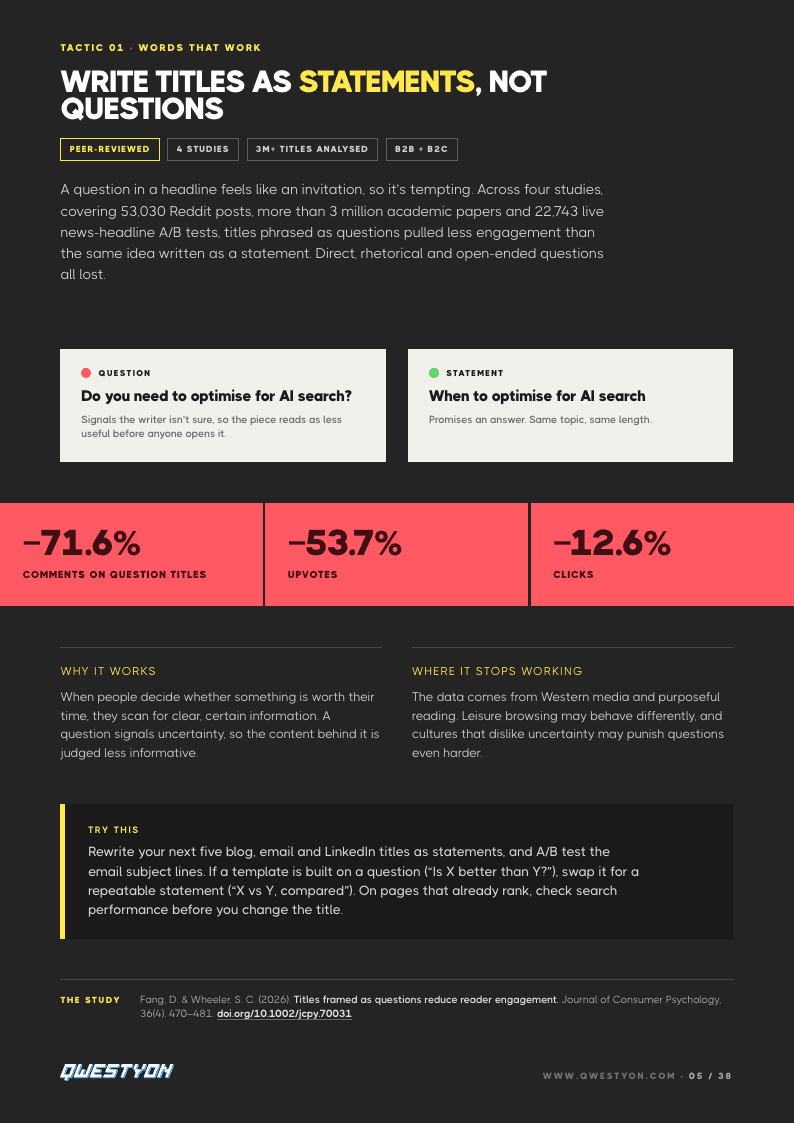
- Why question headlines drew 71.6% fewer comments, and the one setting where a question wins
- The loyalty reward that lifted customer spend by 43.3%, and the number trick that never works on a price
- A 25-point checklist, plus every source with a clickable DOI so you can check it yourself
What you get
- 38-page PDF playbook
- 25 tactics in 5 chapters
- 26 studies, with DOIs
- Free. Instant download.
From the team managing £10M+ in paid media for UK businesses









Every tactic here was tested on people.
25
Tactics you can test this month
26
Studies behind them
15
Peer-reviewed journals
18
Published since 2024
Each tactic comes from a published study that measured how real people responded to headlines, prices, ads, sales calls and AI. One of the 26 is a working paper that has not yet been peer-reviewed, and its page says so. Every figure is the effect one study measured, against that study’s comparison: the direction and rough size of an effect, not the lift your account will see.
What’s inside
Five chapters. One tactic to a page.
Each page gives you the finding, why it works, where it stops working, what to try, and the paper it comes from.
Copy, headlines & naming · 6 tactics
Words that work
How to phrase a headline, which claims backfire, how to talk about benefits, and what a name can do before anyone reads the ad.
Numbers, prices & offers · 4 tactics
The maths of persuasion
Which numbers feel special, how big to print them, what to ask for in return for something free, and what to give as a reward.
Ads, social & testing · 5 tactics
Creative that earns attention
When to sell with feeling or with facts, how much text an image can carry, who to cast, what tone to take, and how far to trust a platform’s own A/B tests.
Sales calls, service & chatbots · 4 tactics
The customer experience
How to sound on a sales call, which parts of a journey people actually remember, why your sense of customer happiness is probably wrong, and how to make a chatbot feel like it’s listening.
AI in marketing · 6 tactics
Marketing with, and to, machines
How to talk about AI in your products, how to make virtual influencers work, how AI shopping agents choose, and how to get better work out of AI inside your own team.
Your action plan
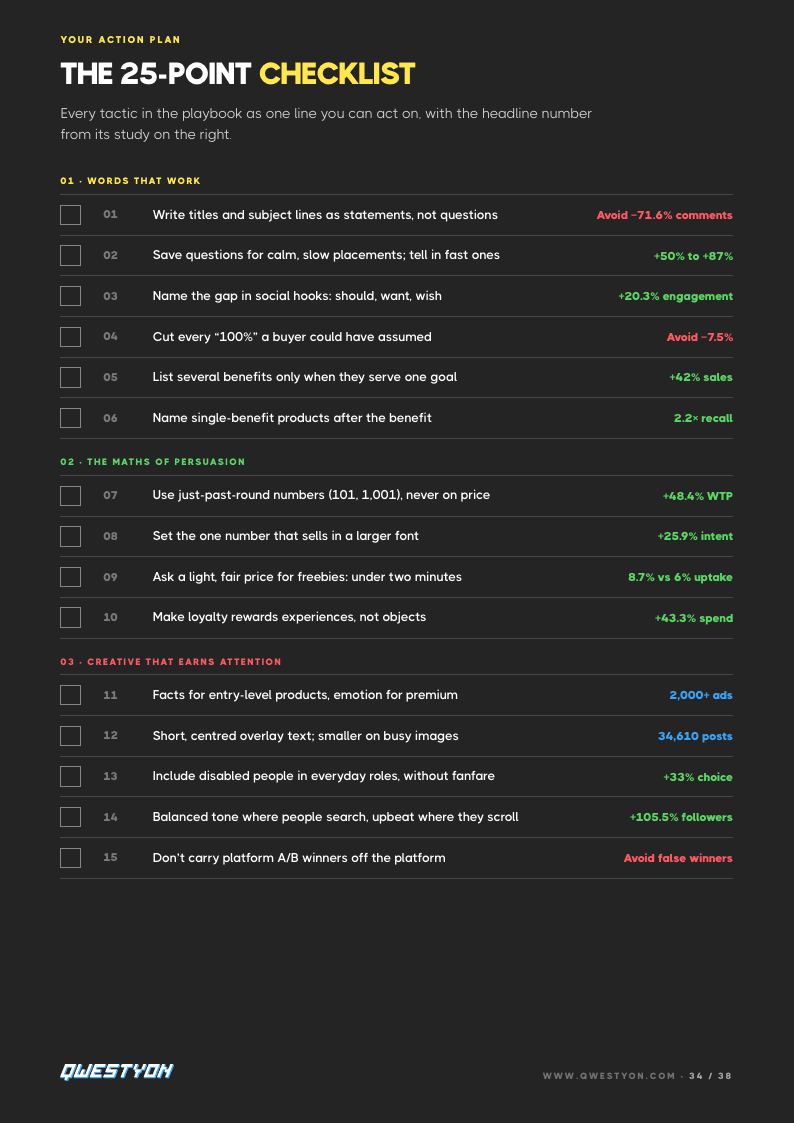
The 25-point checklist
Every tactic in the playbook as one line you can act on, with the headline number from its study beside it.
Every paper, with its DOI
References
The full citation for every study, linked to the paper itself rather than to anyone’s summary of it.
A taste of the research
Five findings. Check every one.
Each link goes to the paper itself, not to a summary of it. The playbook does the same for all 25 tactics.
Fang & Wheeler · Journal of Consumer Psychology · 2026
Question headlines drew 71.6% fewer comments
Across four studies, including 22,743 live news-headline A/B tests, titles phrased as questions pulled less engagement than the same idea written as a statement.
Huang & Gong · Journal of Consumer Research · 2018
1,001 beats 1,000
A number just above a round boundary lifted choice share by 33% across nine experiments. The same trick on a price, $101 against $100, did no better, or worse.
Huang · Journal of Consumer Behaviour · 2025
Set the key number bigger
Printing a key figure noticeably larger than the text around it raised willingness to buy by 25.9%, and made a printed price feel cheaper.
Ruvio, Khodakarami, Morgeson & Voorhees · Journal of Retailing · 2026
Reward with experiences, not things
Salon customers offered an experience as a loyalty reward spent 43.3% more while working towards it than customers offered a product of the same value.
Braun & Schwartz · Journal of Marketing · 2025
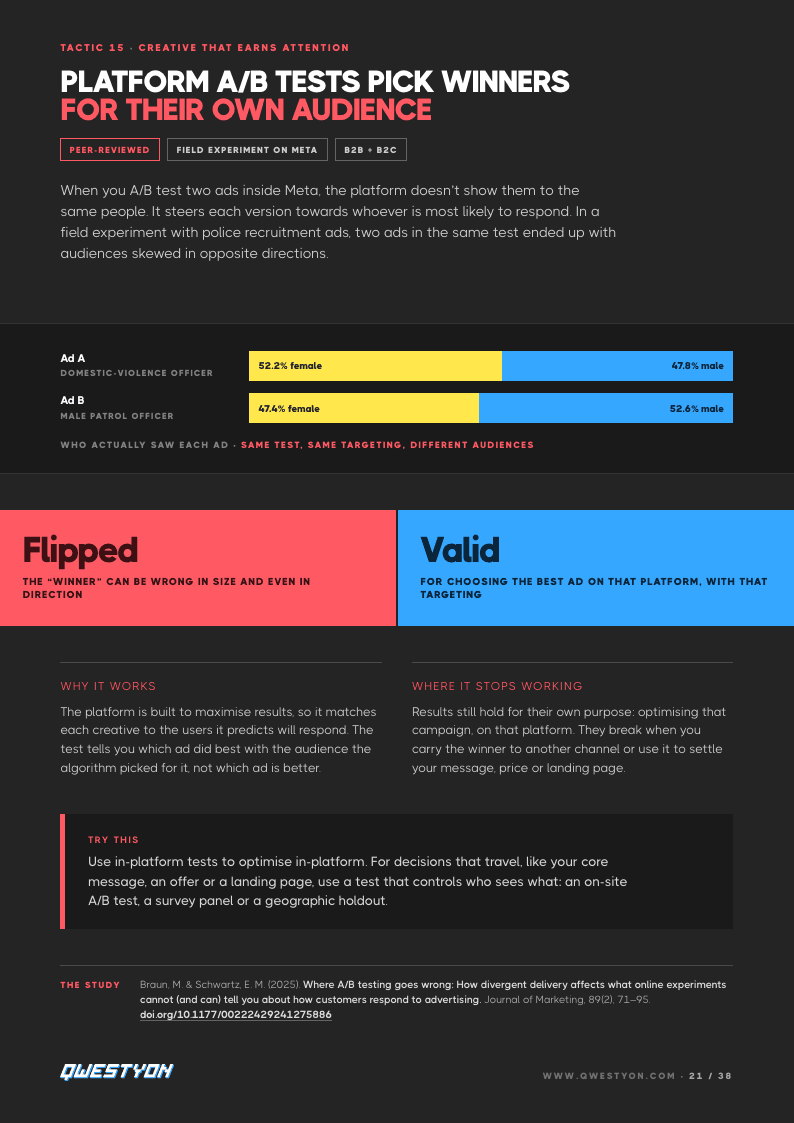
Meta’s A/B tests pick winners for their own audience
The platform steers each ad towards whoever it predicts will respond, so a test can get the size, and even the direction, of a difference wrong.
Peek inside
See exactly what you’re getting.
Who’s behind it
Compiled by practitioners, checked against the papers.
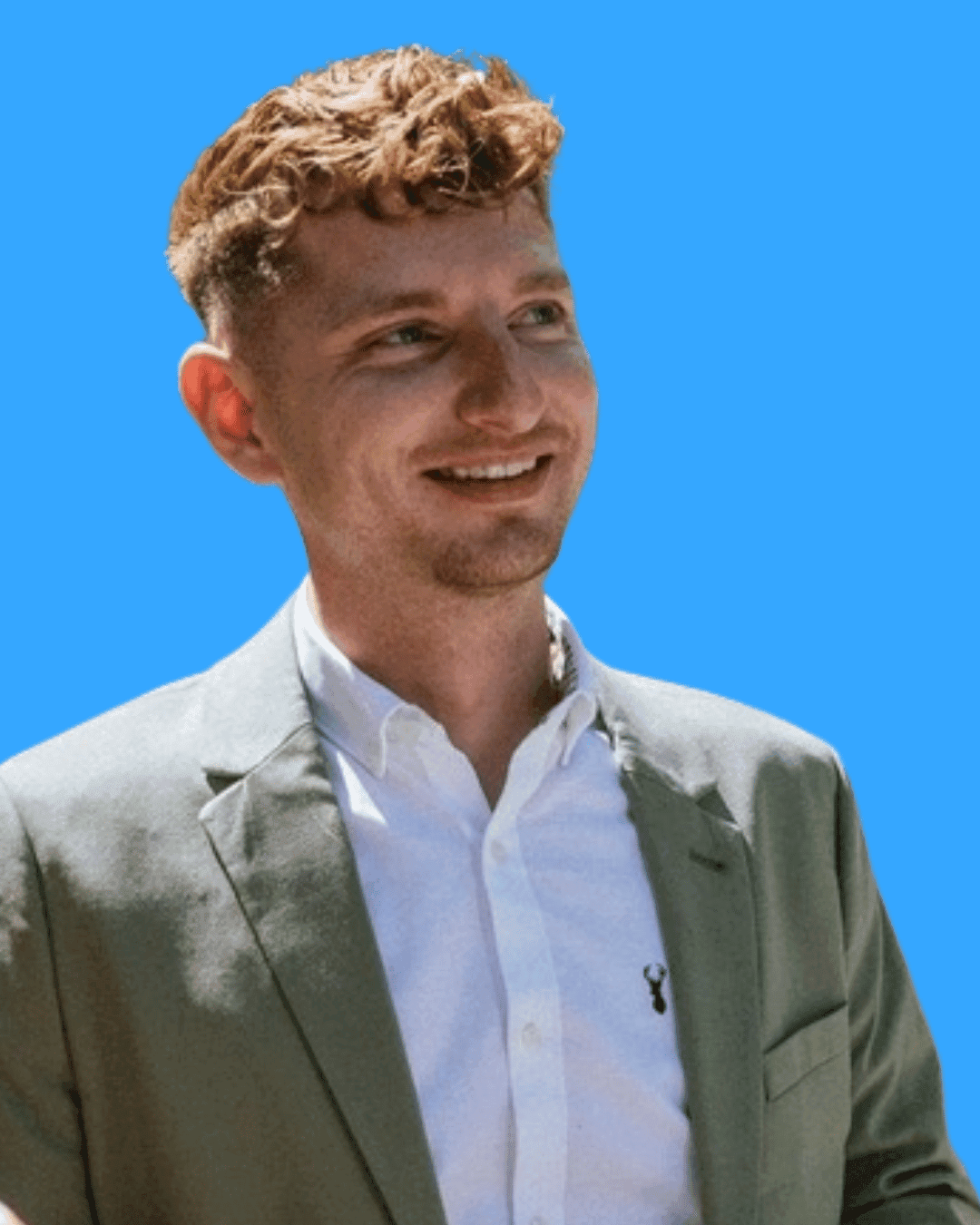
Adam Rodell
Founder, Qwestyon
Adam has spent 10+ years running paid media for UK businesses, with £10M+ in managed spend across Google and Meta. This playbook collects the research we lean on when we write ads, set offers and design tests, and goes back to each original paper rather than trusting someone else’s summary of it.
More about Adam“…they made an immediate impact on our ROI, boosting our ROAS by 300%, increasing leads, and cutting our CPL.…” Full quote: This is one of the easiest recommendations I've had to make - Adam and the Qwestyon team are amazing to work with. They're quick to respond, incredibly knowledgeable, and always on top of the shifting digital landscape. Most importantly, they made an immediate impact on our ROI, boosting our ROAS by 300%, increasing leads, and cutting our CPL. If you're an established business looking to maximise ROI or a startup ready to grow, Qwestyon are the digital specialists you need.

Marketing Manager
SimplyVAT
“…Without them we wouldn't have had the growth that we have had over the last couple of years. The best.” Full quote: Adam and the team are super knowledgeable and have driven us forward. Without them we wouldn't have had the growth that we have had over the last couple of years. The best.

Jason
Pink Swag
The basics
What is science-backed marketing?
Science-backed marketing means choosing a tactic because a published study measured how real people responded to it. Most marketing advice is opinion, case studies chosen because they worked, or a rule of thumb that has been repeated so often nobody remembers where it came from. A study is different: it compares one version against another, on enough people to tell a real effect from noise, and says how it did that.
That does not make a finding a guarantee. Each figure is the effect one study measured against its own comparison, in its own setting. It tells you the direction and rough size of an effect, not the lift your account will see. Most effects also have a boundary. A question headline loses in a busy feed but can win in a calm one, and a number just above a round figure helps a product claim but not a price.
So the useful habit is to treat research as a strong starting hypothesis. Pick the tactics that fit what you are about to launch, run them on a slice of your traffic, and keep what works for your customers. That is how this playbook is laid out: the finding, why it works, where it stops working, and what to try.
It also means checking the source. Summaries of research drift: a sample size gets rounded, a study count changes, a result gets stretched to a platform the paper never tested. Every tactic in the playbook links to the original paper through its DOI, and where a popular summary got a detail wrong, the playbook follows the paper.
The finding
What the study measured, on how many people, and the size of the effect it found.
Where it stops working
The boundary of the effect. It is usually where people apply a finding wrongly.
What to try
A specific change you can make and test this month, collected in the 25-point checklist.
Related: Meta Ads management · Free Meta Ads audit · Free Google Ads audit
Short on time? Start on page 34.
The 25-point checklist is the whole playbook in twenty-five lines, with the headline number from each study beside it. Pick the three that fit your next campaign and test those first.
- 38 pages, one tactic to a page
- Every study linked by its DOI
- Free, instant download
Frequently asked questions.
Marketing advice is mostly opinion. This isn’t.
25 tactics that were tested on real people, each with the paper behind it and the place it stops working.
Want the research applied to your ads? Get a free Meta Ads audit.